
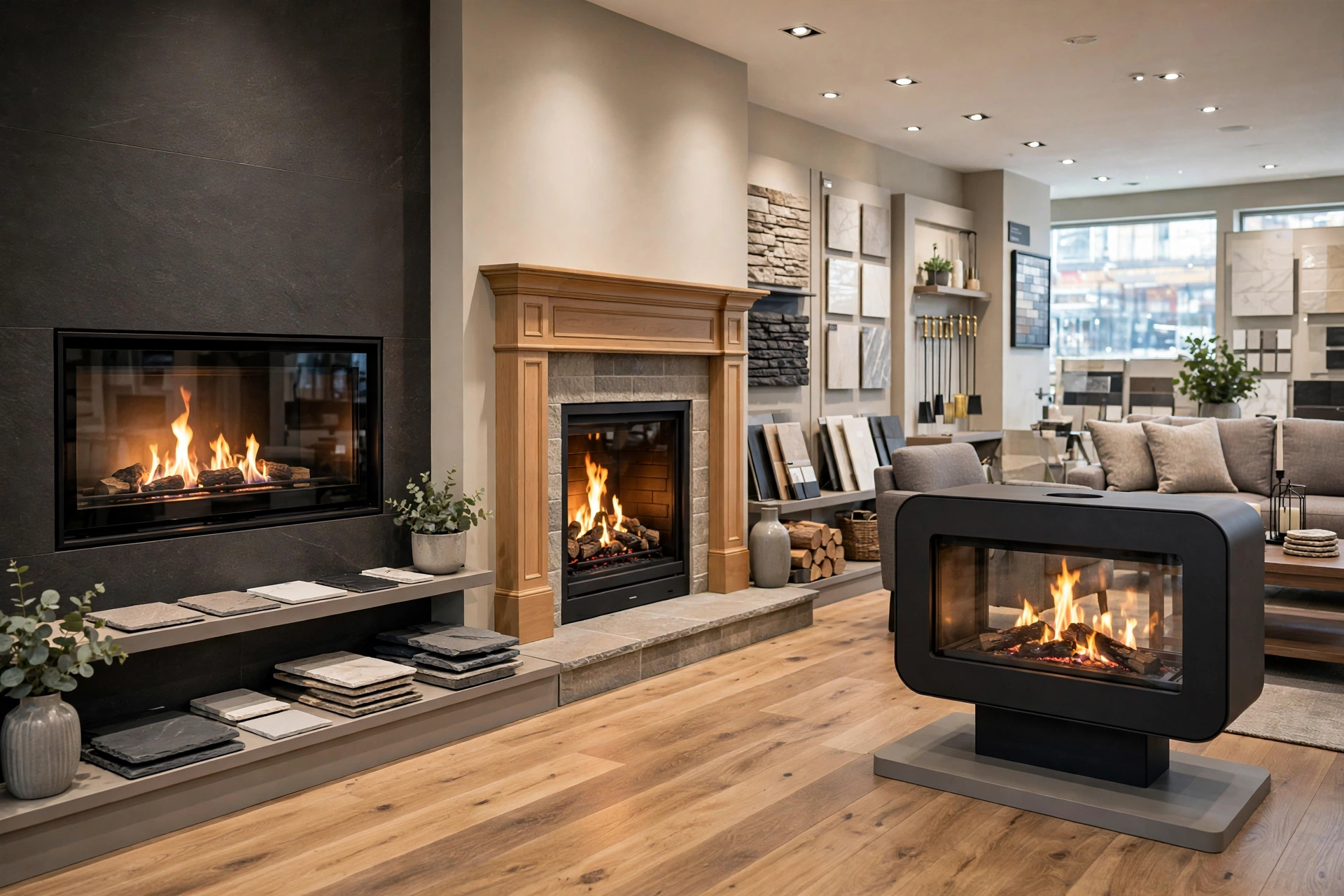
Ventless fireplace installation cost spans a wide range depending on the appliance type and how much gas-line work the job needs: a complete unit-and-labor job sits well above a simple wood-to-gas log-set conversion, where only the equipment itself is the main cost, according to 2026 national contractor-pricing data from home-services marketplaces such as Angi and HomeGuide. Get a written, itemized quote for your specific job rather than relying on a general range. But price is not the first question. A ventless (vent-free) gas fireplace burns fuel indoors and releases its combustion byproducts, including carbon monoxide, directly into the room instead of through a chimney or vent pipe. The unit’s only automatic safety cutoff is an oxygen depletion sensor (ODS), not a flue, and a working carbon monoxide detector is not optional equipment near one. Read that before the price tag, because it decides which installation jobs a homeowner can legally do and which ones cannot.

The Combustion Question Comes Before the Price Question
A ventless unit has no chimney to carry away exhaust gases, water vapor or particulates. It relies on complete combustion and an ODS that is designed to shut the appliance off if room oxygen drops too low. The Consumer Product Safety Commission has repeatedly warned that unvented gas heating appliances, including ventless fireplaces and log sets, are linked to carbon monoxide poisoning and asphyxiation risk when a room is too small, too tightly sealed, or the appliance is left running unattended, as noted in CPSC’s hazard warning on furnaces, space heaters and fireplaces (read 2026-09-18). An ODS is not a carbon monoxide detector and does not reliably warn of rising CO levels on its own, which is why a separate, working CO alarm in the room is part of the installation, not an afterthought bought later.
Who Is Legally Allowed to Install One
Ventless fireplace installation is gas-appliance work, and the gas connection, pressure testing and appliance sizing fall under the National Fuel Gas Code, NFPA 54 (read 2026-09-18), or the state or local fuel-gas code adopted in its place. That work is routed to a licensed gas fitter, plumber or HVAC contractor, never done as a homeowner DIY project, because it involves a live gas line, pressure regulation to the manufacturer’s specified inlet pressure, and a combustion-air and room-volume check that the installer signs off on. This is also where jurisdiction stops being a formality: some cities and states restrict or outright ban ventless gas appliances, and code adoption dates and amendments vary by county, so a unit legal to sell is not automatically legal to install where you live. Before buying anything, call the local building department or fire marshal and ask directly whether ventless installation is permitted in your address, and whether a permit and inspection are required. A contractor who skips that step, or who will install without a permit, is not the contractor to hire.
If you are renting rather than owning, installation approval is a separate permission on top of the code question. A landlord’s sign-off, the property’s insurance terms and the local code all have to line up before a unit goes in, which is exactly the sequence covered in the three permissions renters need before installing a ventless fireplace.
Ventless Fireplace Installation Cost Breakdown
The number changes with three variables: the appliance itself, the labor to run and test the gas line, and the finish work around it.
Unit cost. A vent-free log set is the cheapest entry point; a vent-free insert or built-in firebox costs more because it includes a cabinet, glass front and blower. The type you choose changes both the price and the installation footprint, which is why it is worth comparing logs, inserts and stoves before pricing a job rather than after.
Labor. Installer labor for a typical gas-line hookup and unit setting adds a meaningful amount on top of the equipment cost, per the same 2026 contractor-marketplace data referenced above. That figure assumes an existing gas line is nearby; running new gas piping through walls or a slab adds materially to the labor total and is a separate line item any licensed contractor should quote before starting.
Finish work. A mantel, hearth surround or built-in cabinetry is optional and priced separately from the appliance and the gas work. It does not affect the safety of the installation, but it is the line item that most often pushes a “basic install” quote toward the higher end of the range.
Two things do not belong in a ventless installation quote at all: a chimney liner or vent-pipe run (ventless units do not use one) and a clearance-to-combustibles number that isn’t specific to your exact model. Clearances are set by the manufacturer’s own listed installation instructions and by the code official’s interpretation of them, not by a general rule of thumb, so ask the installer to show you the clearance spec from your unit’s manual before the finish materials go up.
Does Converting an Existing Fireplace Change the Cost
Converting an existing wood-burning or vented gas fireplace to a ventless log set is usually the cheapest path, because the firebox opening, hearth and surround already exist and only the burner assembly and gas supply change. New construction, by contrast, adds framing, hearth-pad clearance and often a longer gas run, which is where the labor estimate above moves toward its higher end. Either way, an installer converting an older fireplace still has to confirm the firebox and chimney damper condition before the ventless unit goes in, since a partially blocked or unsafe existing flue is a separate repair, not something the new appliance fixes. If the fireplace being converted is already in use and simply due for its yearly check, that is a different task from installation and belongs with a start-of-season safety routine, not the install quote itself.
Does the Fuel Type Change the Price
Ventless units run on either natural gas or propane, and the two are not interchangeable without the correct burner orifice for that fuel. A unit built for natural gas will not burn propane safely at the same setting, and vice versa; this is a manufacturer-specification detail, not a field adjustment an installer improvises. If your home does not already have a gas line, the fuel choice also decides the labor scope: natural gas means tying into the household gas piping, while propane may mean a small dedicated tank and regulator instead of trenching a new gas line to the house main. Ask the installer to quote both the appliance and the fuel-supply work for your specific fuel type before comparing prices between contractors, since a “propane-ready” quote and a “natural-gas-ready” quote for the same model are rarely the same total.
What Drives the Price Up or Down
Room size is a code requirement, not a design preference: the space has to meet the minimum combustion-air volume specified for that appliance’s input rating, and an installer who skips measuring it is skipping a safety step, not saving you money. A room that is too small or too airtight for the unit’s BTU rating either fails inspection or gets refused by an installer who is following the rules, and that refusal is protecting you, not obstructing the project. Homes with tight building envelopes, finished basements, or additions built after an older code cycle are the ones most likely to hit this wall, which is also why an existing gas fireplace being resold with a house often needs a fresh look rather than an assumption that the prior installation still qualifies.
Once the unit is in and running, two more costs sit just past the installation invoice: telling your home insurer it exists, since what to disclose to your insurer and when affects your coverage if something goes wrong, and running the unit through a start-of-season checklist before the first fire each year, which catches problems a one-time installation inspection cannot.
Getting Quotes Without Getting Burned
Ask every quote for three things in writing: the manufacturer and model being installed, the licensed trade credential of the person doing the gas work, and confirmation that a permit will be pulled where the local code requires one. A quote that is unusually low and skips the permit step is usually skipping the inspection that catches an oversized unit for an undersized room, which is precisely the condition the ODS and a CO detector exist to catch after the fact. Get the manufacturer’s own installation manual for your exact model before work starts and keep it with your home records; it is the actual source for your unit’s BTU rating and clearance requirements, not a general online chart.
FAQ
How much does it cost to install a ventless fireplace?
A complete unit-and-labor job costs considerably more than a simple wood-to-gas log-set conversion, where equipment is the main expense, per 2026 national contractor-pricing data. New gas-line runs, permits and finish materials all add to the total, so get a written, itemized quote for your specific job rather than relying on a general figure.
Can I install a ventless fireplace myself?
No, not the gas connection. Running or modifying a gas line, setting pressure to the manufacturer’s spec, and the combustion-air check are licensed-trade work under the National Fuel Gas Code. A homeowner can choose the unit and the surround finish; a licensed gas fitter, plumber or HVAC contractor does the gas work.
Are ventless fireplaces legal everywhere?
No. Some states, cities and counties restrict or ban ventless gas appliances outright, and code adoption varies locally. Call your local building department or fire marshal before buying to confirm ventless installation is permitted at your address.
Does a ventless fireplace need a carbon monoxide detector?
Yes. The unit’s oxygen depletion sensor is not a carbon monoxide detector and is not designed to reliably warn of rising CO levels by itself. A separate, working CO alarm in the room is part of a safe installation.
Why do quotes for the same size fireplace vary so much?
The appliance type (log set versus insert versus built-in firebox), the fuel type and gas-supply work involved, local permit and inspection fees, and finish materials like a mantel or hearth surround all price separately, and any one of them can move the total significantly.