CO Alarm and a Ventless Fireplace: A Condition of Use
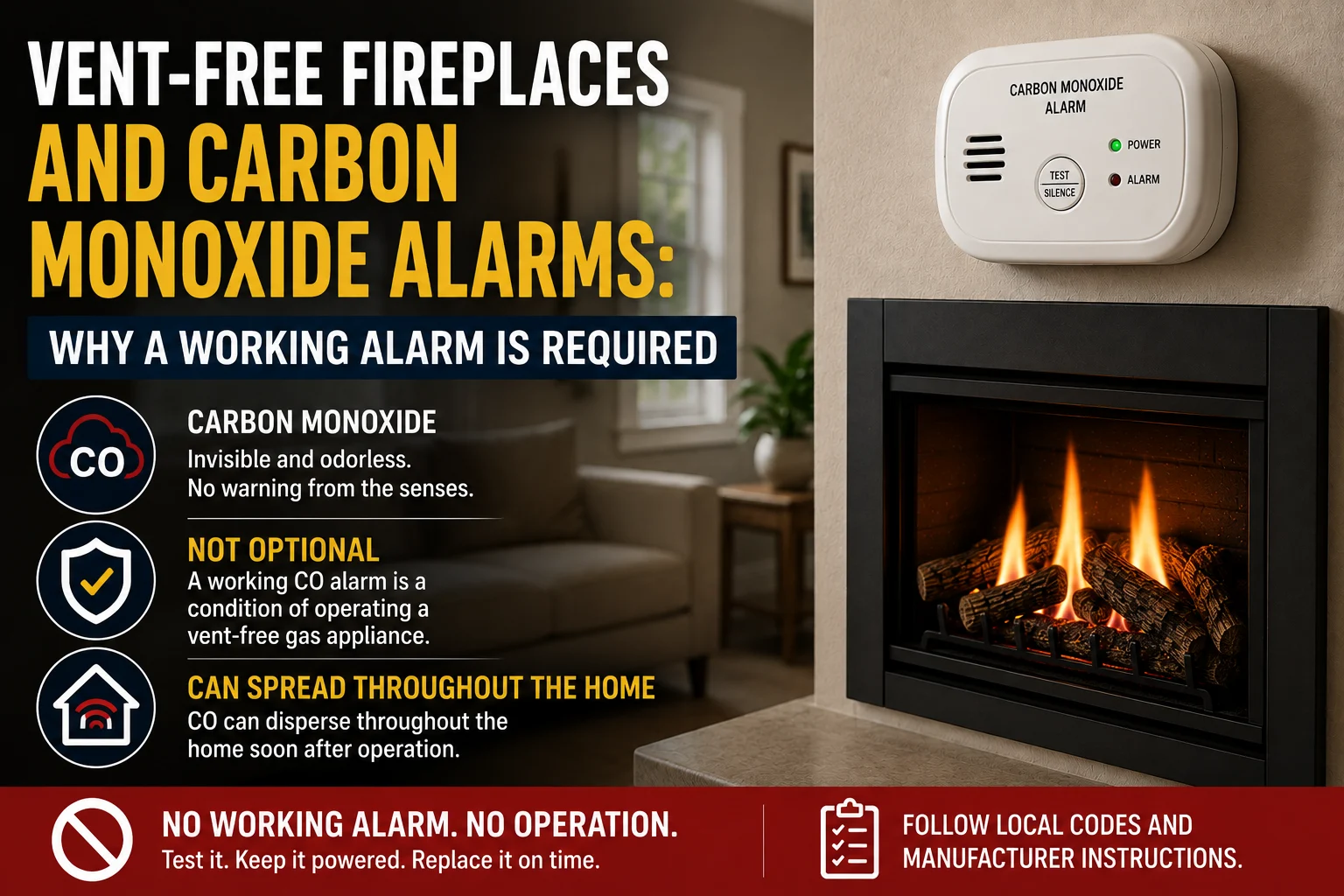
Not a tip, not an accessory. Why a working carbon monoxide alarm is a condition of operating a vent-free gas appliance, and what to do when one sounds.

Not a tip, not an accessory. Why a working carbon monoxide alarm is a condition of operating a vent-free gas appliance, and what to do when one sounds.
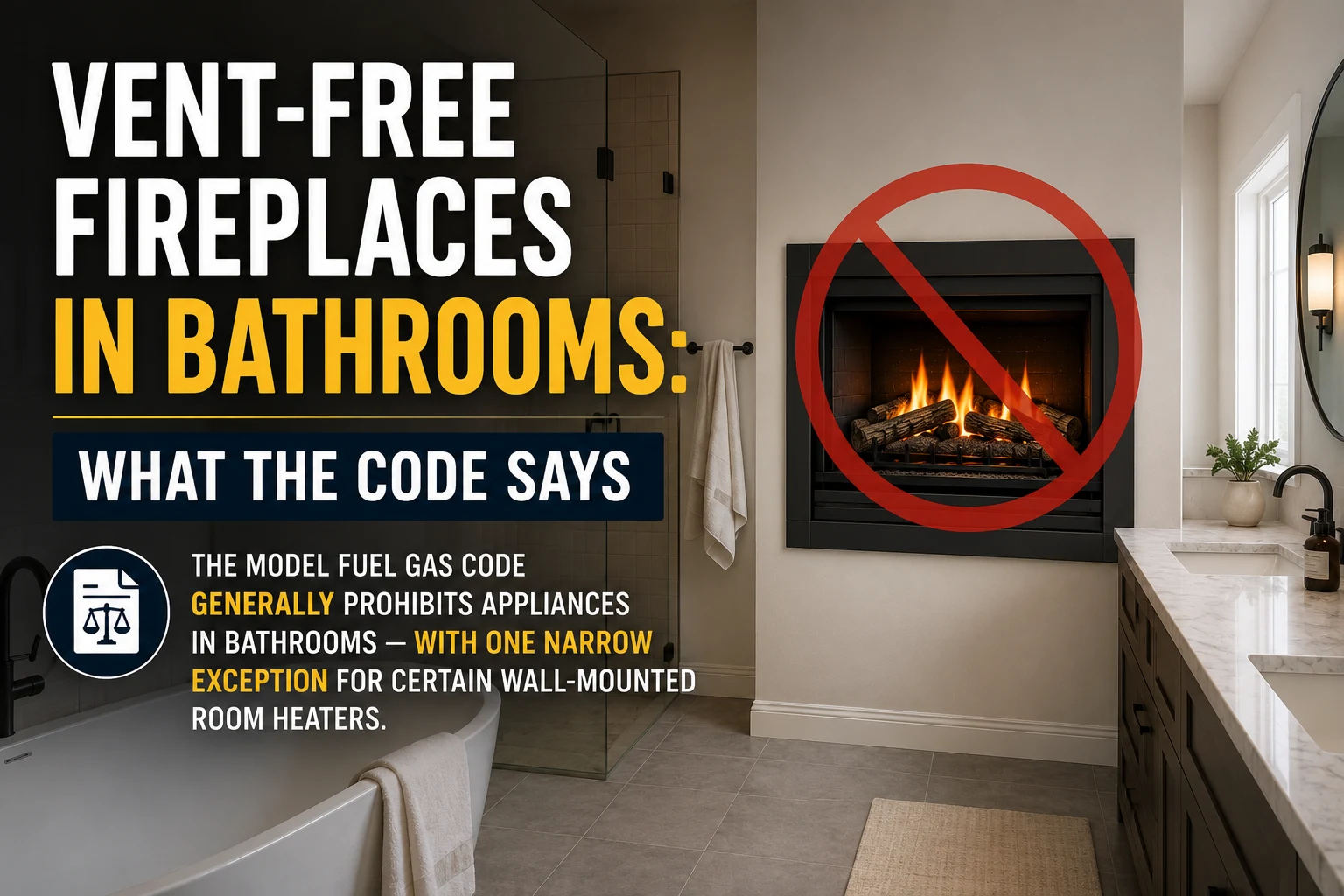
The code’s bathroom exception is capped at 6,000 Btu/h and describes a single wall-mounted room heater. Here is why it almost never fits a fireplace.
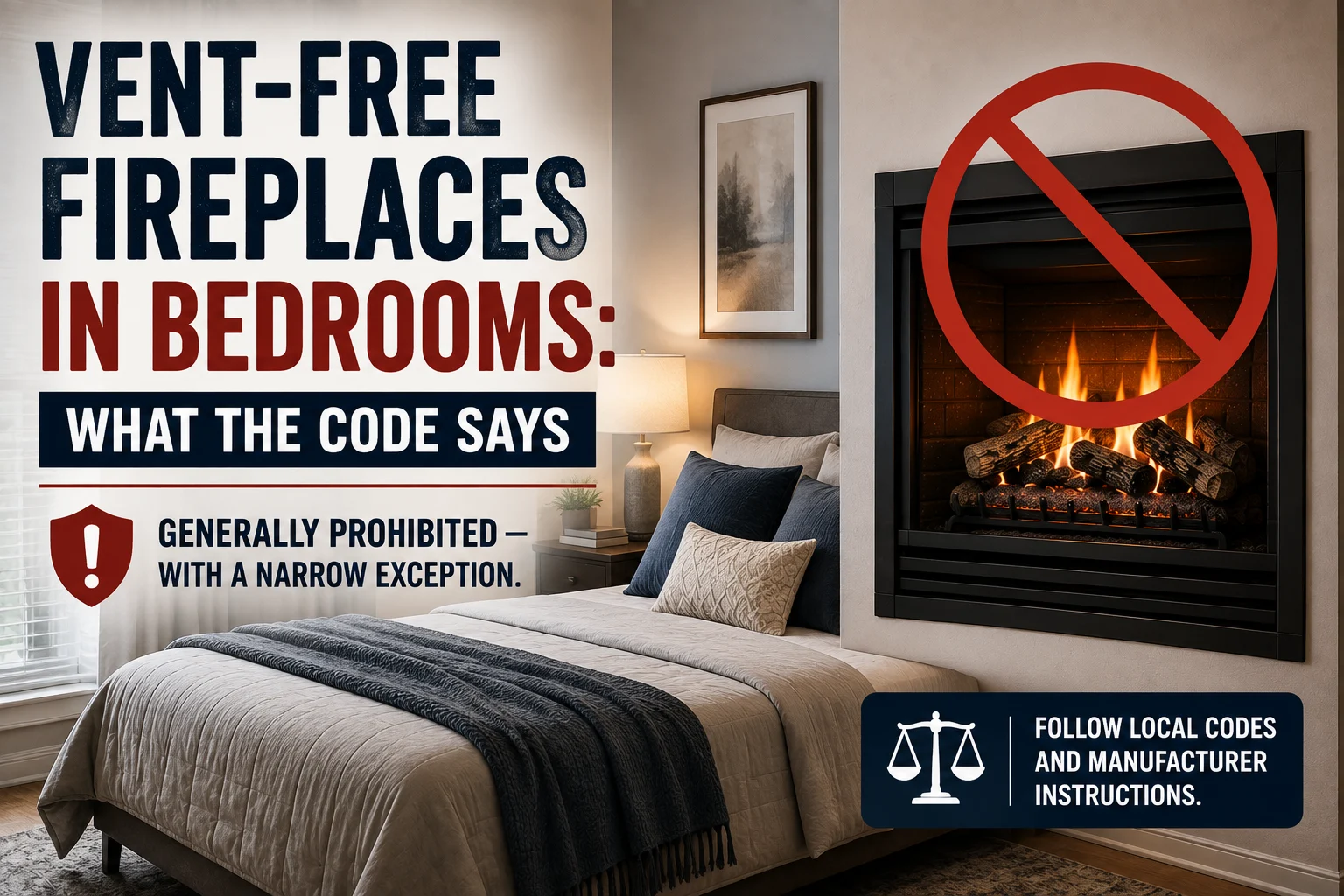
The model code bars appliances from sleeping rooms, with one narrow exception capped at 10,000 Btu/h. Why it almost certainly does not describe your fireplace.
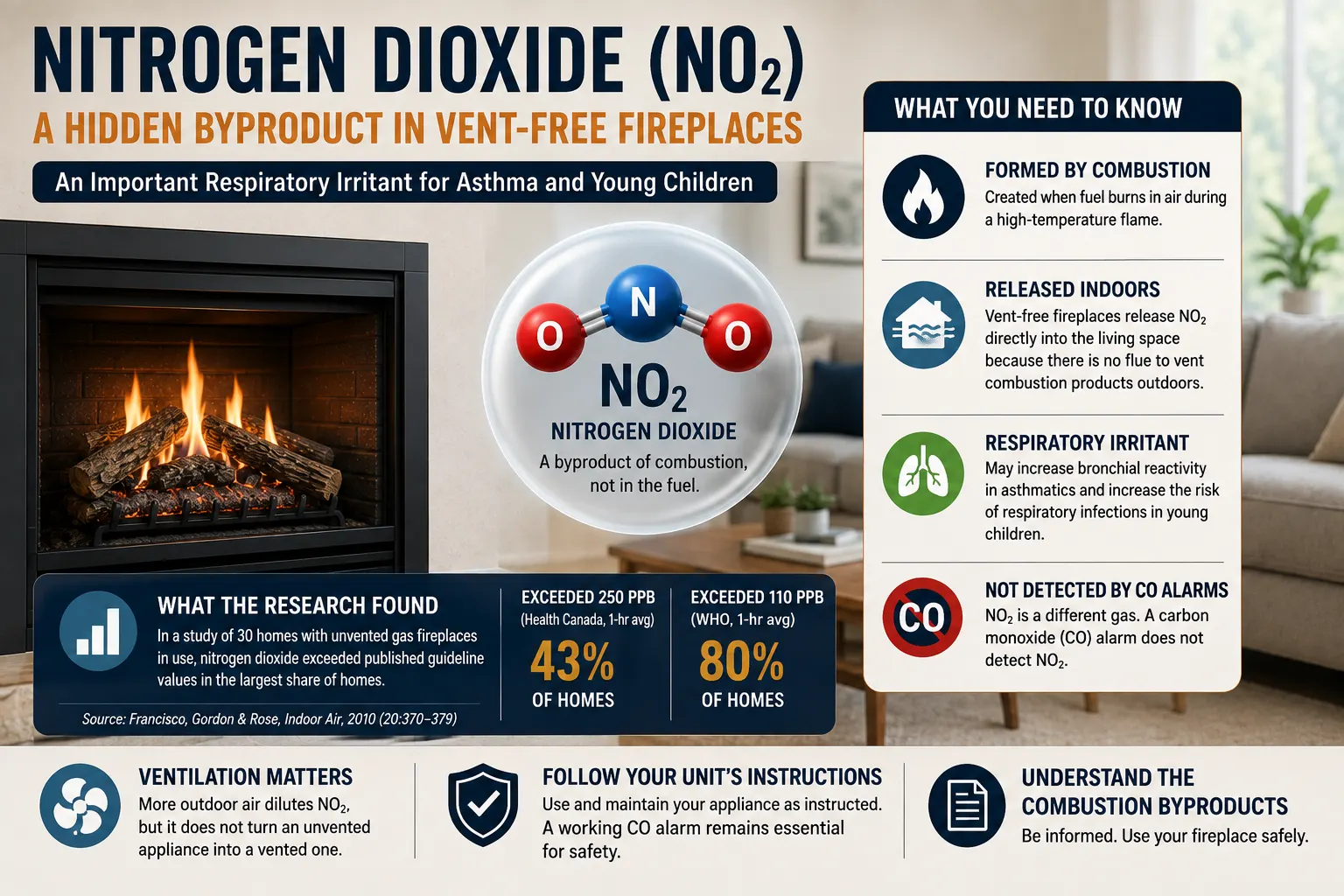
Carbon monoxide is not the only combustion byproduct in the room. What NO2 is, why it matters for asthma, and why a CO alarm does not see it.
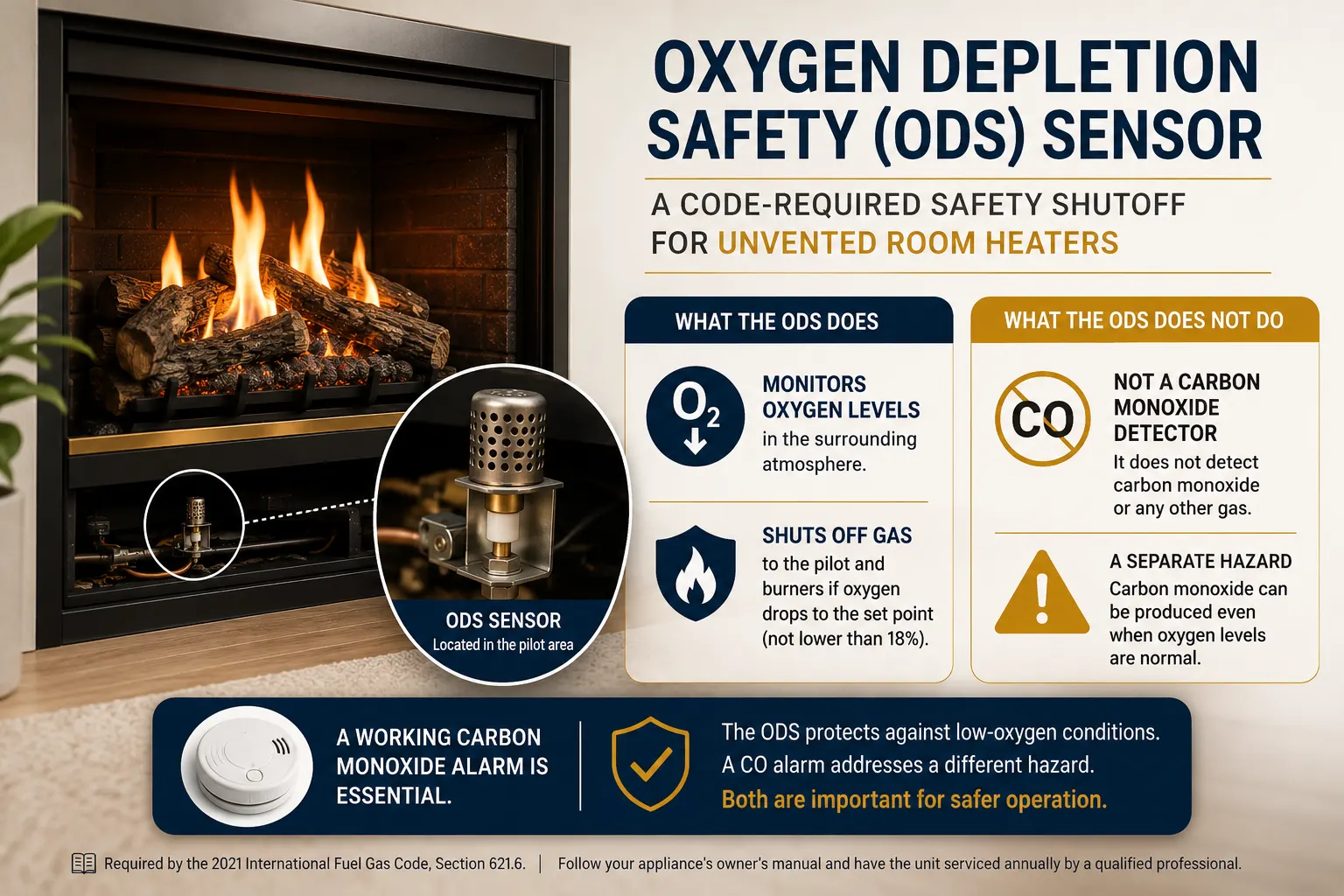
An ODS is a low-oxygen gas shutoff, not a carbon monoxide detector. The exact code language, the 18 percent figure, and where the protection stops.
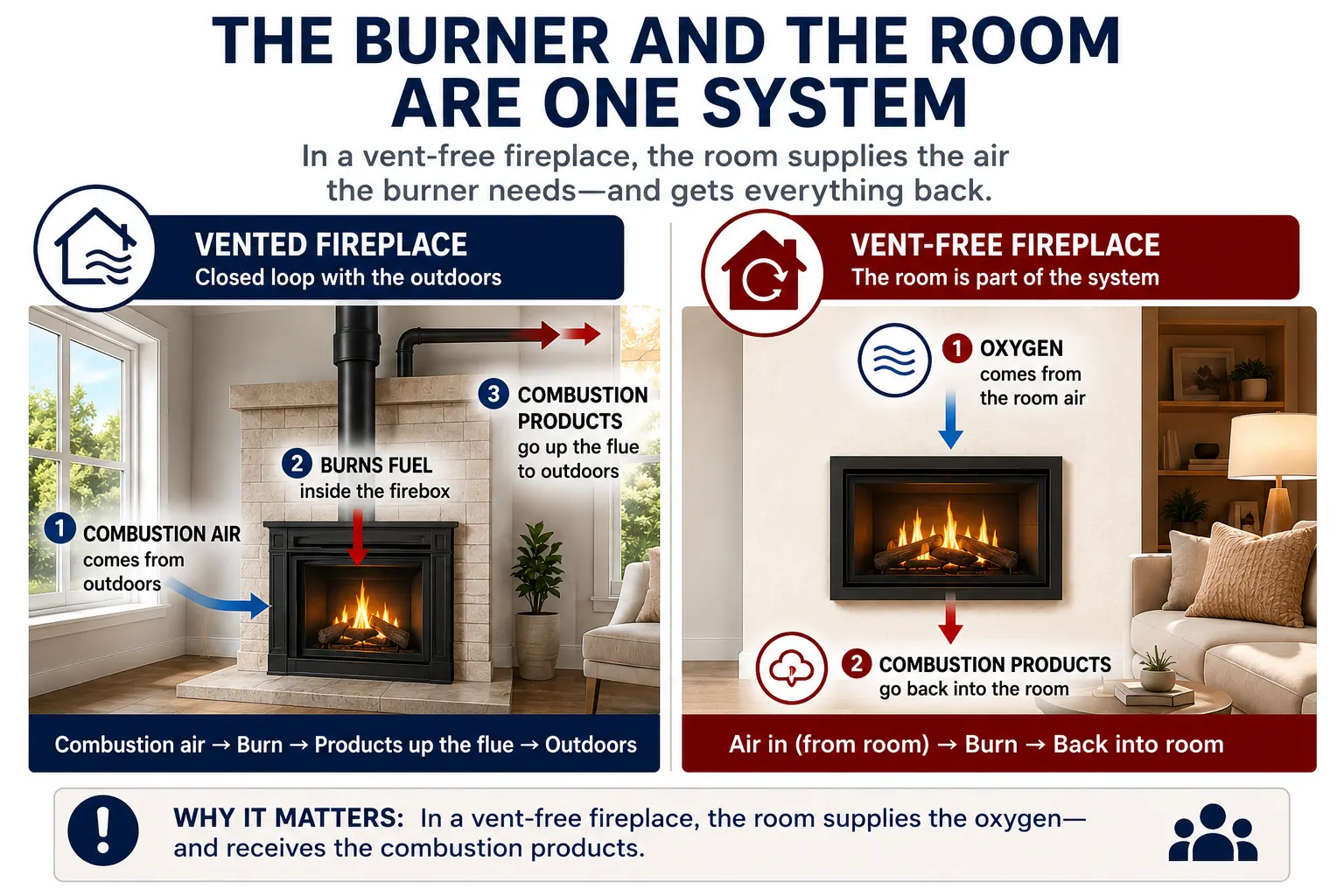
A vent-free burner draws its oxygen from the room you are sitting in. What that actually does, why the code caps input by room volume, and what it does not tell you.
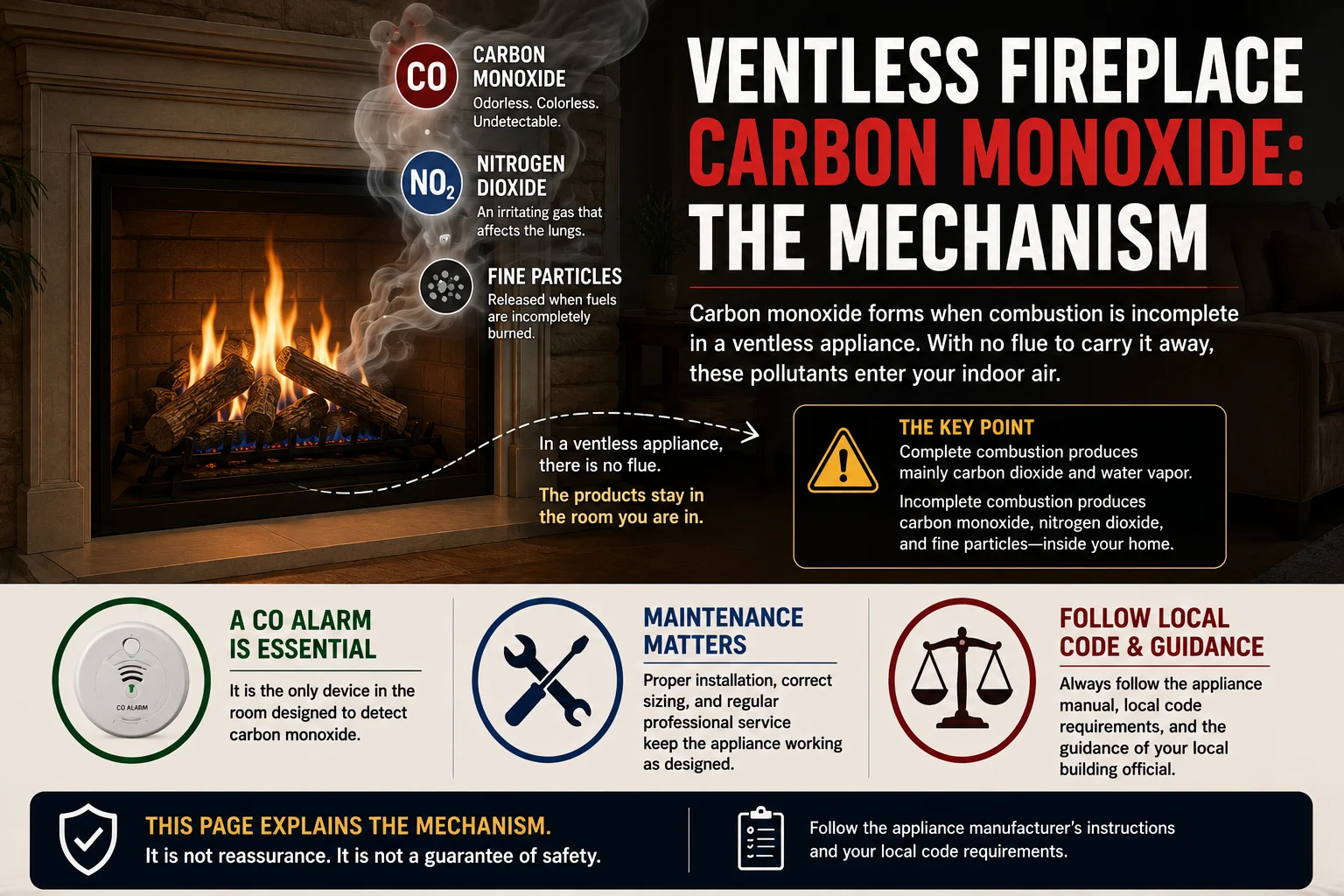
Vent-free means the exhaust stays in the room. When carbon monoxide forms, why the ODS does not catch it, and why the alarm is not optional.
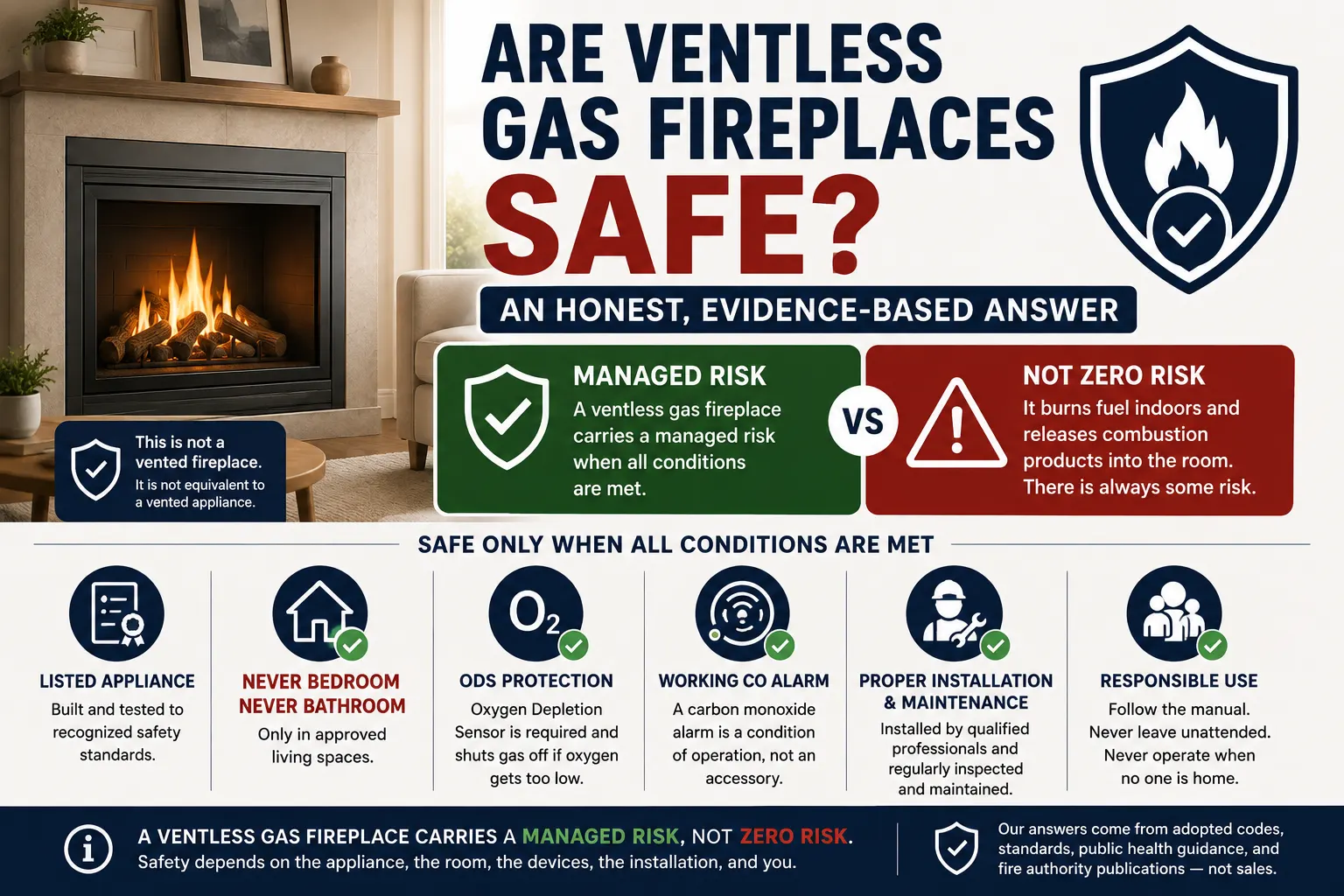
A neutral answer with nothing to sell: what a vent-free burner puts in your room, what the ODS does and does not do, and where it is never allowed.