Ventless Fireplace: Natural Gas vs Propane Explained

Natural gas or propane in a vent-free fireplace: what actually changes, what the label settles, and why the fuel is not something you switch yourself.

Natural gas or propane in a vent-free fireplace: what actually changes, what the label settles, and why the fuel is not something you switch yourself.
How to choose a ventless gas fireplace in the order that matters: legality, room volume, the listing, the fuel, the licensed fitter. Code-sourced figures.
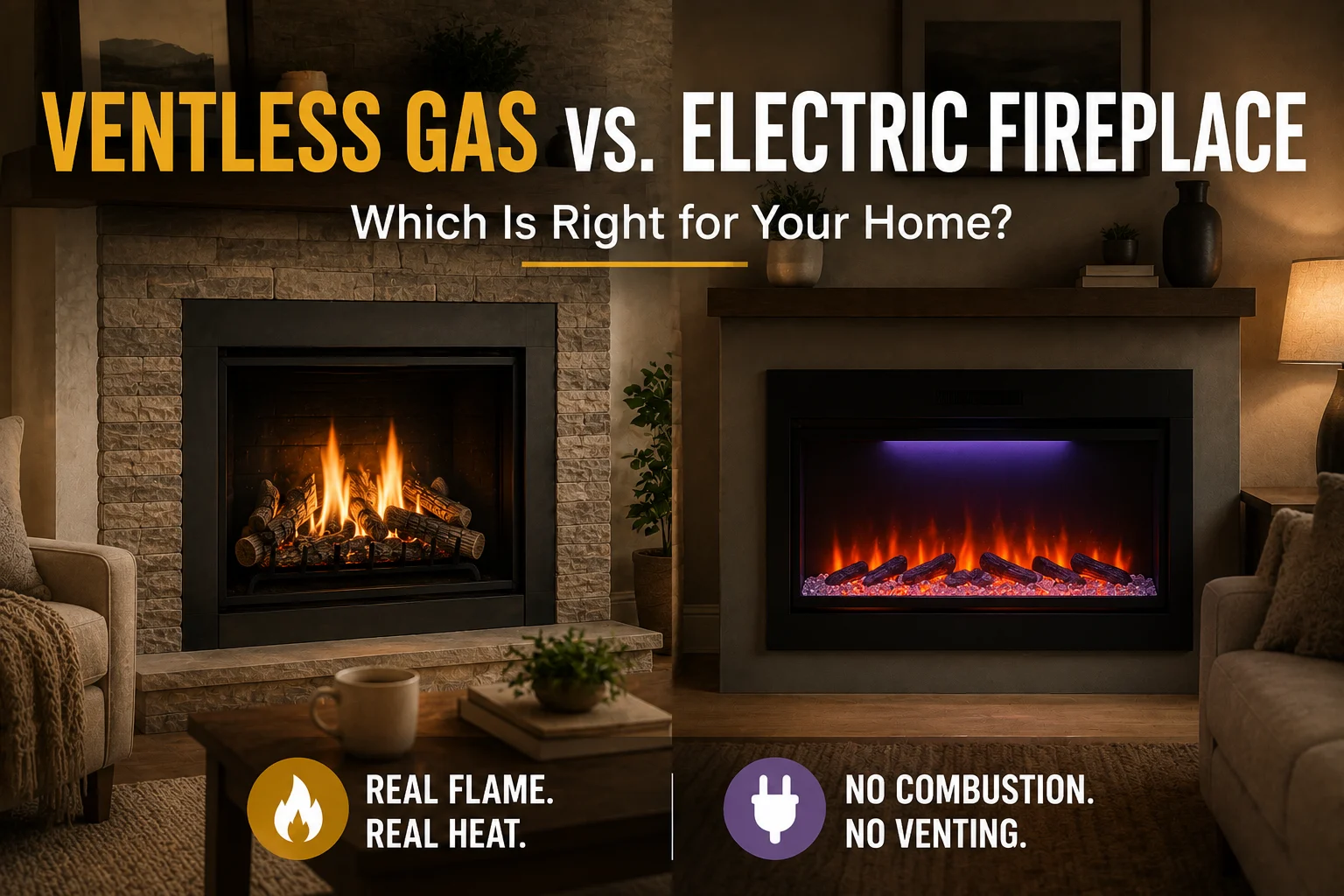
Ventless gas vs electric fireplace, compared honestly: real heat output, the circuit ceiling nobody mentions, legality, and outage performance.
The 99.9% efficiency claim on ventless fireplaces is true and nearly useless. What it measures, what it excludes, and why it cancels itself out.
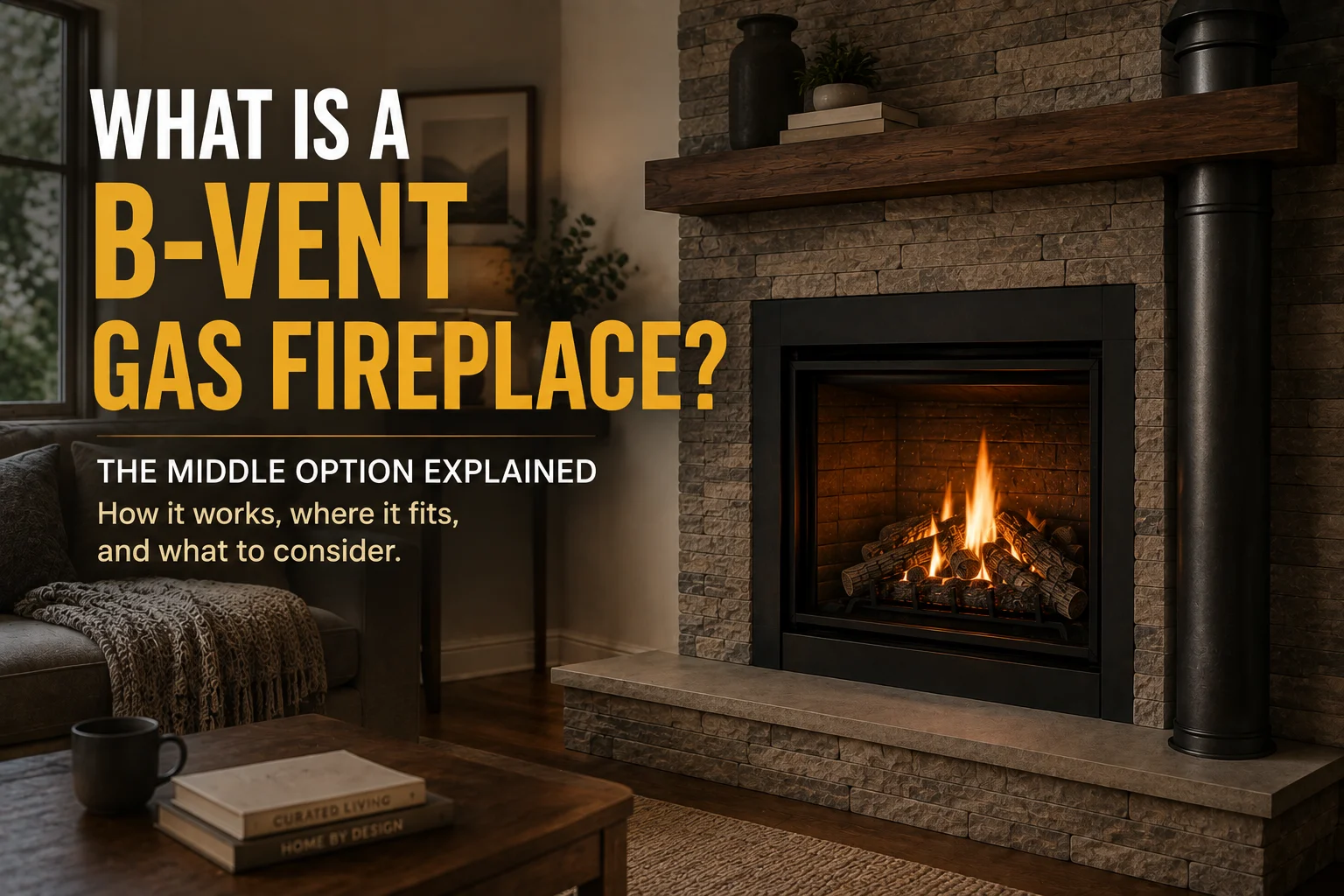
A B-vent gas fireplace burns room air and vents up a vertical flue. What that means for draft, safety and how to tell it from a vent-free unit.

No, not a traditional chimney. What each gas fireplace type needs instead, why an old flue is not automatically a gas vent, and who decides.
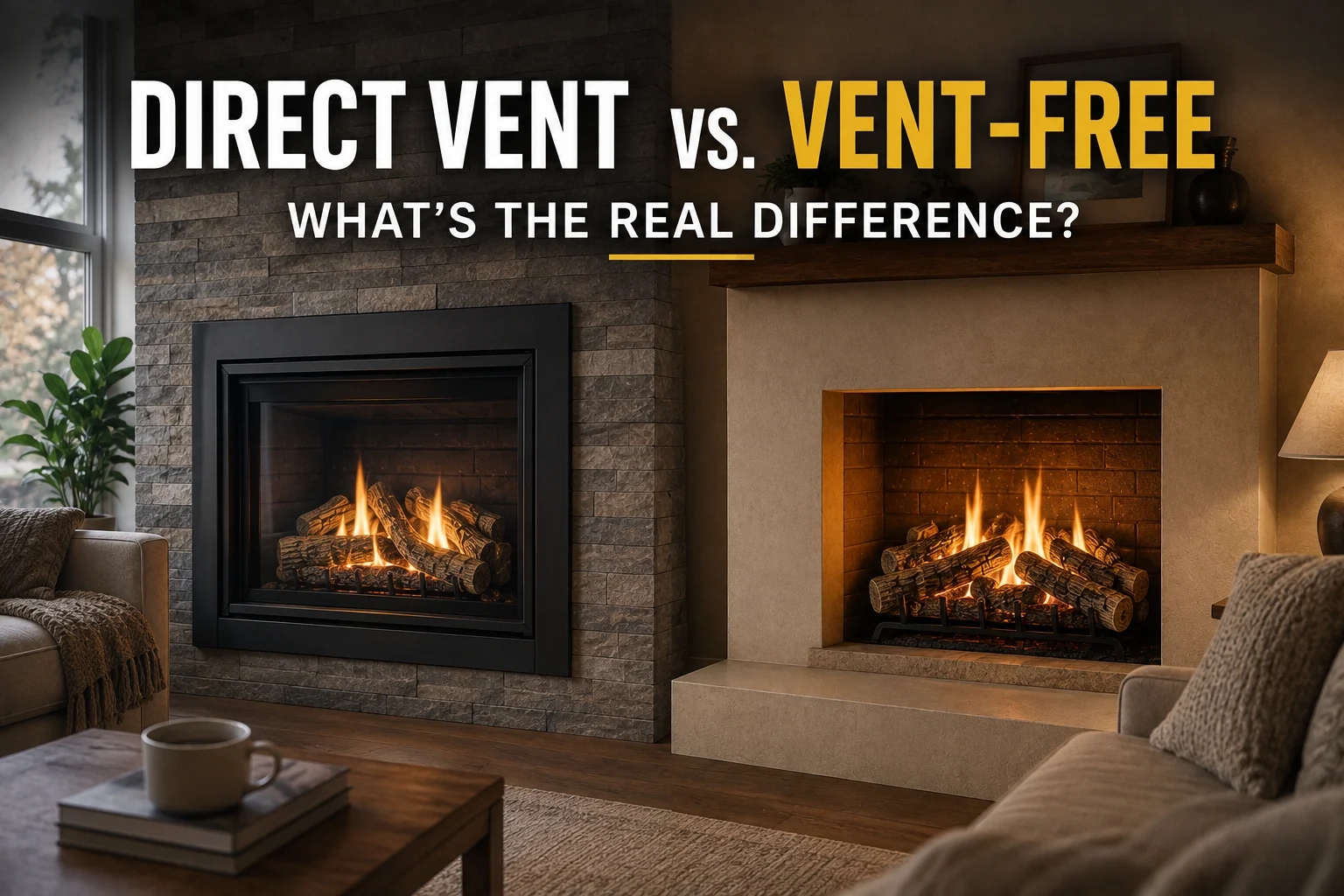
The real difference between direct vent and ventless gas fireplaces: sealed combustion, what the ODS does not do, and why the room decides.
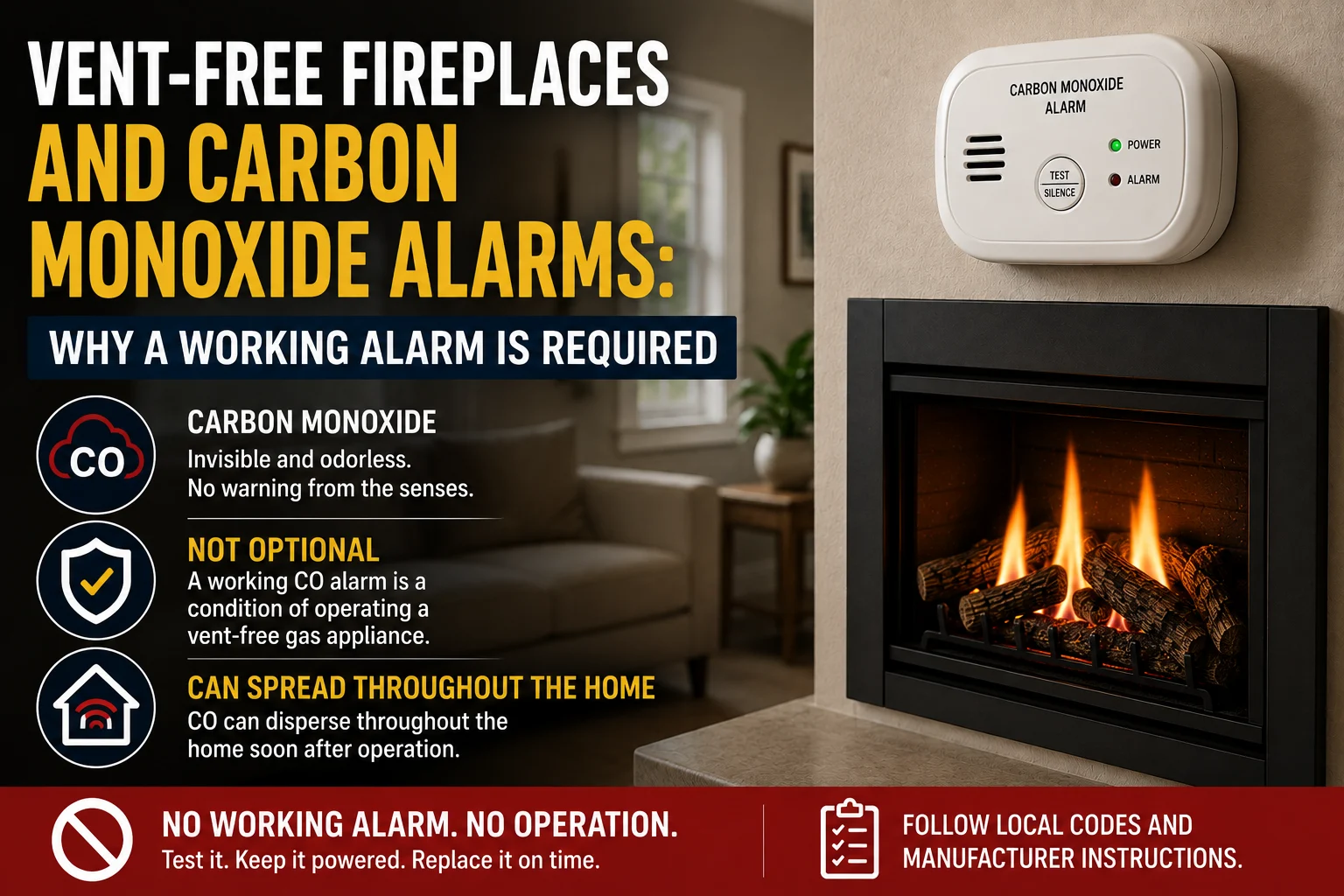
Not a tip, not an accessory. Why a working carbon monoxide alarm is a condition of operating a vent-free gas appliance, and what to do when one sounds.
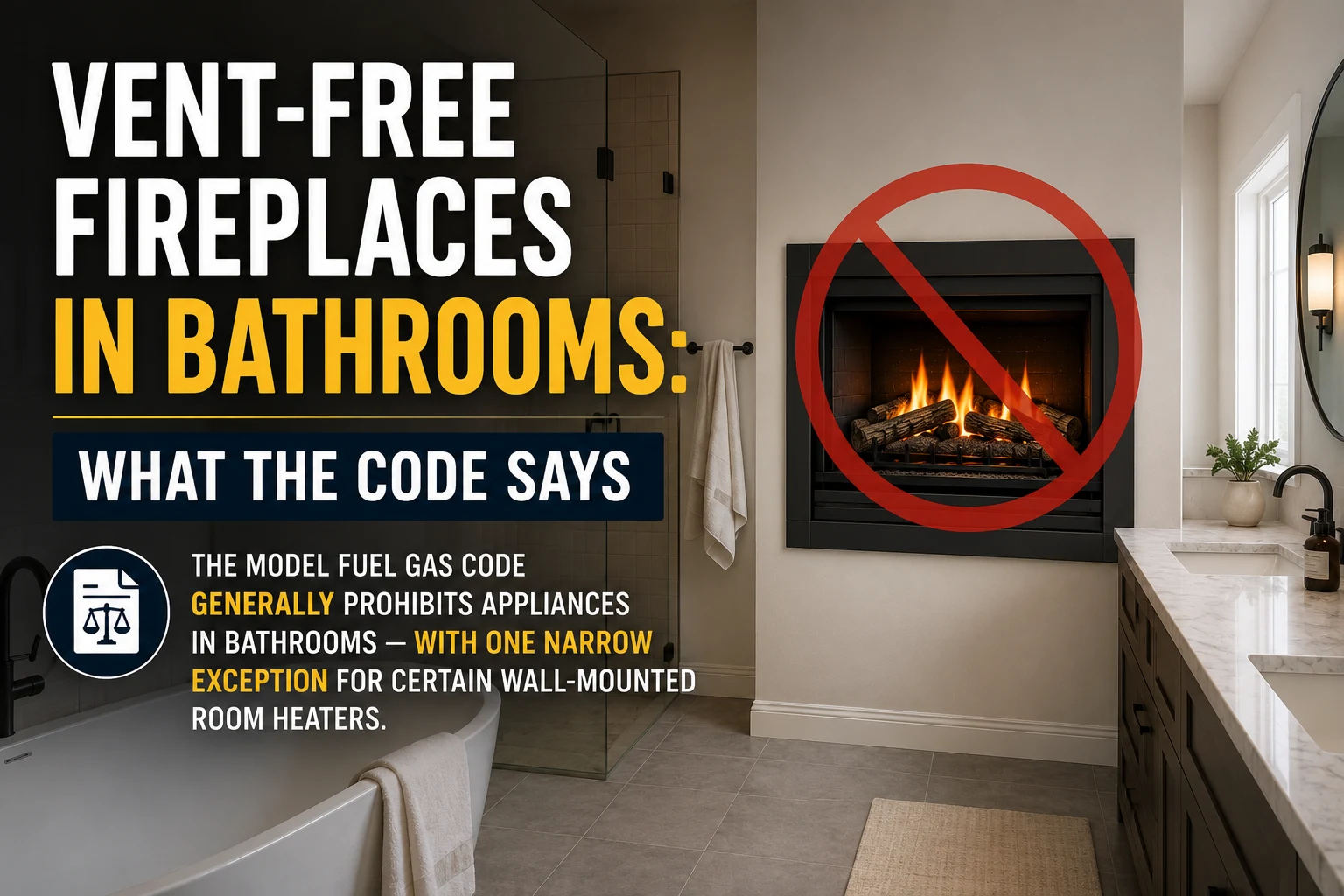
The code’s bathroom exception is capped at 6,000 Btu/h and describes a single wall-mounted room heater. Here is why it almost never fits a fireplace.
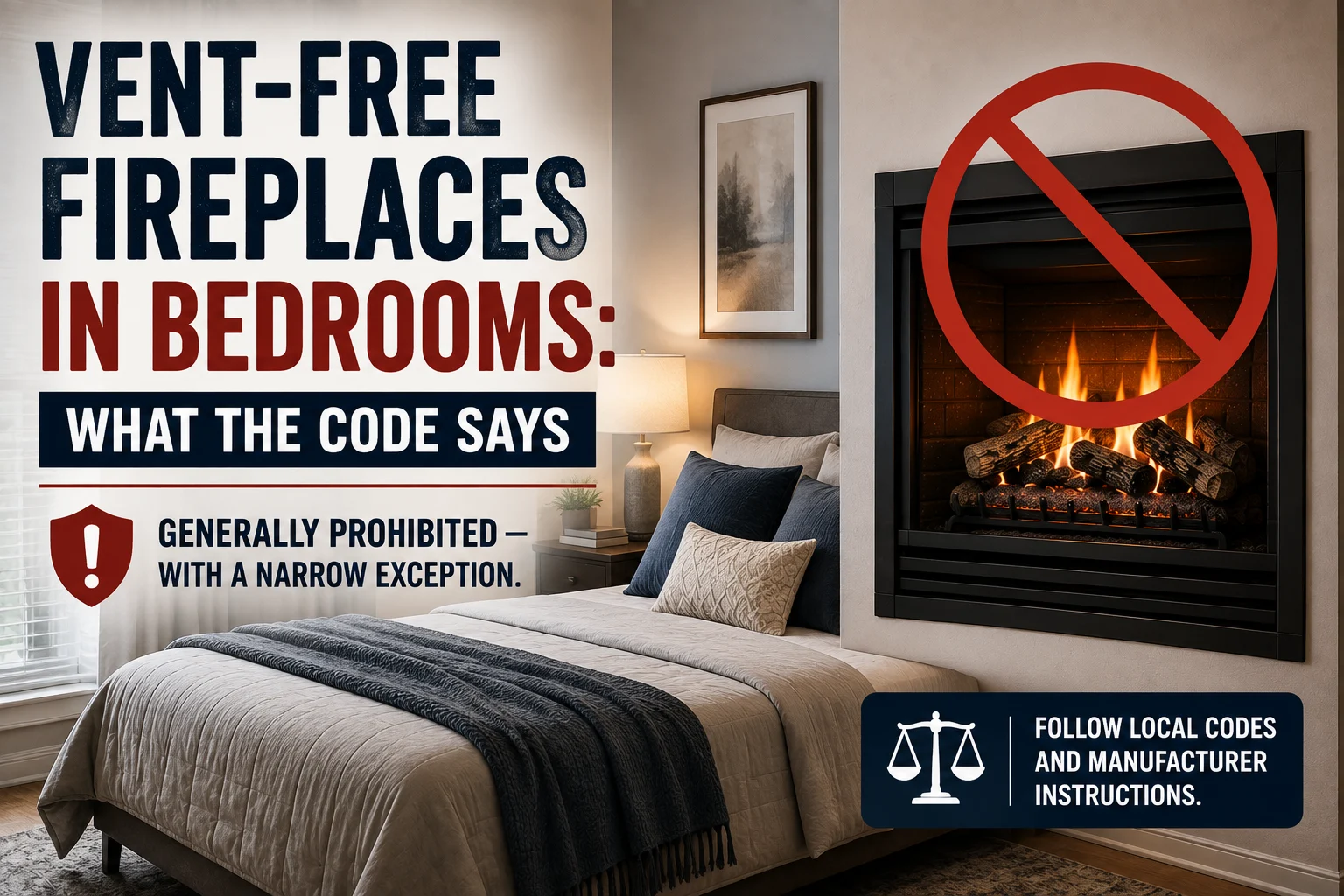
The model code bars appliances from sleeping rooms, with one narrow exception capped at 10,000 Btu/h. Why it almost certainly does not describe your fireplace.